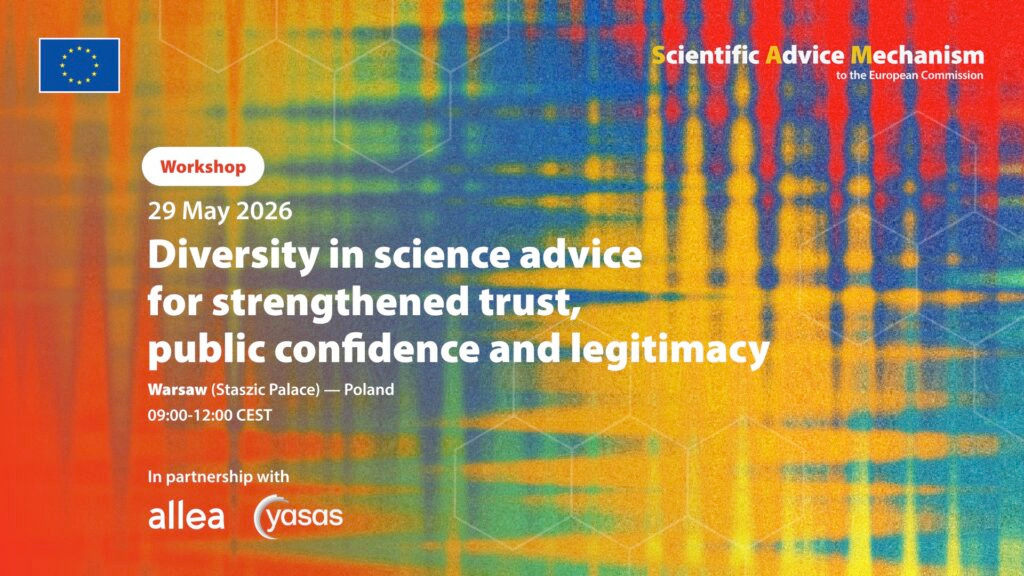
Diversity in science advice for strengthened trust, public confidence and legitimacy
Friday 29 May, 09:00 - 12:00, Staszic Palace, Warsaw, Poland
This SAPEA workshop is organised jointly by YASAS and ALLEA as part of a broader series of events designed to share knowledge and good practices among Europe’s academies.
Registration is open by 13 May at this link.
Processes and practices of science advice, as well as the individuals engaged in them, are under increasing political, financial, and societal pressure. These pressures, which reflect wider challenges affecting science more broadly, influence how science advice is produced, which experts are involved, and the conditions under which they participate.
These developments raise critical questions in relation to equality, diversity and inclusion (EDI) as well as academic freedom in and for science advice. Early-career researchers, displaced and at-risk scientists, and individuals from minority groups are often most adversely impacted by the current situation. EDI is not only about “who is in the room”, but about whether people can participate safely, freely and meaningfully in scientific advisory processes.
While the range of perspectives feeding into science advice is narrowing, science advice is also increasingly expected to operate across borders and to engage with a variety of expertise. Yet, in a changing geopolitical landscape, persisting national or regional centric approaches along with ongoing pressures and restrictions determine where and who produces knowledge and whose expertise is recognised. Therefore, understanding how inclusive science advice systems can be sustained under these conditions is a political and epistemological challenge.
This workshop intends to provide a space for academics and actors engaging at the science-policy interface or interested to learn more, including early-career researchers and displaced scientists, to exchange experiences, surface practical solutions and identify concrete actions that strengthen inclusive, resilient science advice practices. Only solid practices and their outward communication can increase public trust in science advice and its legitimacy.
The objectives of the workshop are:
Discuss concrete examples of how current political, legal, funding, and societal pressures affect diversity, participation and knowledge production in science advice processes, impacting trust and legitimacy.
Exchange experiences and approaches used by science advice structures, academies and intermediaries to support inclusive participation thus contributing to resilient, independent systems.
Discuss and identify actions that could be of further help to reinforce a culture of free, resilient and independent science for science advices.
Programme:
09:00 - 09:15: Welcome and opening
09:15 -09:35: Keynote
09:35 – 09:55: Lightning talks introducing breakout discussions
09:55 - 10:50: Breakout sessions
10:50 – 11:50: Plenary: sharing ideas and discussion
11:50 – 12:00: Closing and next steps
Breakout sessions:
Theme 1: Academic freedom, inclusion and the credibility of science advice.
What are the key conditions under which academia can effectively contribute to credible and legitimate science advice? How can science advice processes ensure both academic freedom and meaningful inclusion of underrepresented groups, while maintaining high scientific standards?
Theme 2: Funding, compliance and mobility: constraints on participation in science advice
How do funding conditionality, compliance requirements and mobility barriers shape inclusion and participation in science advice systems? Which groups of experts are most affected? What practical changes could reduce inequities and promote equitable access and participation?
Theme 3: Incentives, risks and recognition for engaging in science advice
How do research assessment and existing reward and recognition systems affect participation in science advice, particularly for early-career, interdisciplinary, and researchers from minority groups? What changes to recognition, support or protection mechanisms could lower barriers to participation and sustain diverse advisory engagement?
Theme 4: Diversity of expertise, interdisciplinarity and legitimacy of science advice
How do current science-advice practices define relevant expertise, and with what consequences for the diversity of perspectives informing advice? How can interdisciplinarity be effectively operationalised in science advice processes in ways that enhance trust and credibility?
Speakers
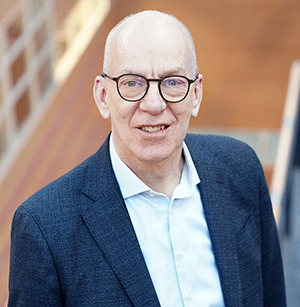

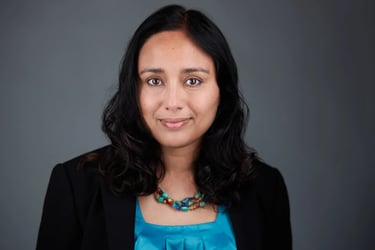
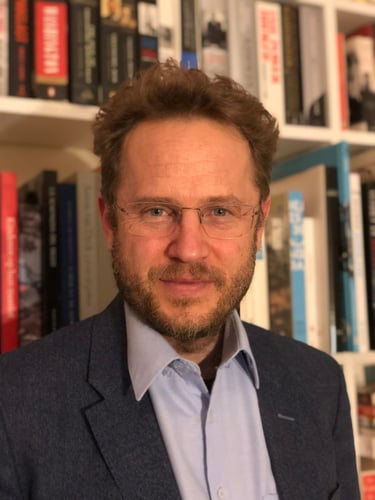


Silvio Suckow
Research Associate, Weizenbaum Institute, Germany
Anna M. Górska
Assistant Professor, Kozminski University and Head of the Research Center for Women and Diversity in Organizations, Poland
Koen Jonkers
Head of Unit, European Commission’s Joint Research Centre (JRC) for Advanced Studies and Chair of the JRC Scientific Committee
Mangala Srinivas
Member of the Group of Chief Scientific Advisors. Full Professor and Head of the Department of Cell Biology and Immunology, Wageningen University & Research
Peter Maassen
Professor in Higher Education Studies, Faculty of Education, University of Oslo
Jovana Milic (moderator)
Associate Professor of Materials Chemistry at the University of Turku in Finland
© 2026. All rights reserved.